Introduction | The moment the world blinked
An ordinary image
It began with an image.
Not a masterpiece or a historic photograph, but a collection of ordinary pictures, dogs, airplanes, cats, flowers. Millions of them.
In 2012, a small research group at the University of Toronto fed those images into a machine and waited.
What happened next would not only win a competition.
It would fracture time, splitting the history of machines into before and after.
AlexNet, a neural network trained to recognize pictures, performed so well that the scientific community had to stop and look again. Not at the images, but at itself.
“It wasn’t that the machine saw better. It was that it began to see differently.”
The winter before vision
Until that moment, artificial intelligence had lived in a long winter. Equations existed in elegance, but machines failed in practice. Neural networks were dismissed as fragile, slow, a romantic dream that never scaled.
And then, within weeks, the field cracked open.
The network built by Alex Krizhevsky, under the guidance of Geoffrey Hinton, did what no algorithm had achieved before. It learned to see with a precision that surpassed every rival, every hand-crafted feature, every system built by human hands.
When the results were announced at the 2012 ImageNet competition in Lake Tahoe, the audience froze. AlexNet’s error rate was almost half that of the next best system. In an instant, the hierarchy of computer vision collapsed.
A convergence of forces
Behind that victory lay a convergence: the rebirth of neural networks, the rise of the GPU and the human obsession with patterns.
Alex Krizhevsky’s network was not simply code. It was inheritance, the continuation of a half-century dream that machines might one day learn the way we do.
What followed was not evolution, but explosion. Within two years, every major tech company — Google, Facebook, Microsoft, Baidu — had built teams around this idea. Within five, the world was speaking the language of deep learning.
And beneath that new language, another story unfolded. A story not about code, but about vision. About imitation. About the human need to teach the world to look back at itself.
The long sleep of the neural dream
Where it really began
The story of AlexNet does not begin in 2012.
It begins in the 1950s, in laboratories where psychologists and mathematicians first tried to model thought itself.
Frank Rosenblatt built the Perceptron, a primitive artificial neuron, in 1958. The machine could recognize simple patterns, letters, shapes. But it was brittle. When critics proved it could not handle complex problems, funding evaporated. The dream froze into silence.
Exile of an idea
For decades, the notion that machines might learn from examples was treated as fringe, almost pseudoscience. Academia preferred logic and symbolic reasoning, not imitation and intuition. Artificial intelligence became a domain of rules and hierarchies, not of growth or learning.
Yet, in small corners of research, the ember never died.
Geoffrey Hinton, a British psychologist turned computer scientist, believed that the brain’s architecture — billions of neurons adjusting their strengths — was the only true path to intelligence.
“If the brain can do it, a machine can too, if only we build it at the right scale.”
Hinton spent years in the margins, publishing papers few read, working with funding so limited that his vision often seemed quixotic. The computing power of the era was too weak. Neural networks were like seeds scattered on stone. Elegant in logic, impossible in growth.
The shift in silence
Then, quietly, the landscape changed.
Video game graphics demanded a new kind of processor, one able to perform thousands of operations in parallel. The GPU, built for pixels and speed, turned out to be perfect for training networks of neurons. What once required weeks could now be done in hours.
When Alex Krizhevsky and his colleague Ilya Sutskever joined Hinton in Toronto, they brought not only curiosity but the tool that would awaken the field. Together, they built a network of eight layers, trained it on millions of images, and watched as it began to form its own hierarchies: edges became shapes, shapes became textures, textures became objects.
The Perceptron had been blind.
AlexNet opened its eyes.
“The moment the machine recognized a cat, humanity recognized itself.”
The philosophical turn
What seemed like a technical victory — a drop in error rates on a dataset of photographs — was in fact philosophical. It suggested that perception could emerge from data without explicit instruction. That vision itself might be a statistical phenomenon.
This realization was not about machines alone. It forced humanity to reconsider its own definition of seeing.
The birth of a new priesthood
The fall of the old guard
After 2012, the old guard of computer vision — the engineers who hand-crafted features, who defined edges and gradients by code — found themselves obsolete almost overnight. Their meticulous craft collapsed under the weight of networks that no longer needed their rules.
The field reorganized itself around neural networks. Conferences swelled with newcomers, funding multiplied, and the term deep learning became less a method than a mantra.
From research to industry
Within months, Google acquired Hinton’s tiny startup, DNNresearch. Facebook hired Yann LeCun. Microsoft built entire divisions around convolutional nets. The discipline of artificial intelligence, once fractured, now gathered under a single paradigm: let the data speak.
But every revolution builds its own clergy.
“The simplicity of deep learning — feed data, adjust weights, minimize error — concealed a new opacity.”
The opacity of insight
No one truly understood how the networks achieved their results. The algorithms were transparent in code, but their reasoning was hidden in millions of parameters. The machine could explain its output, but not the path it had taken to reach it.
Humanity had built a mirror that reflected everything, except its own reflection.
The architecture of control
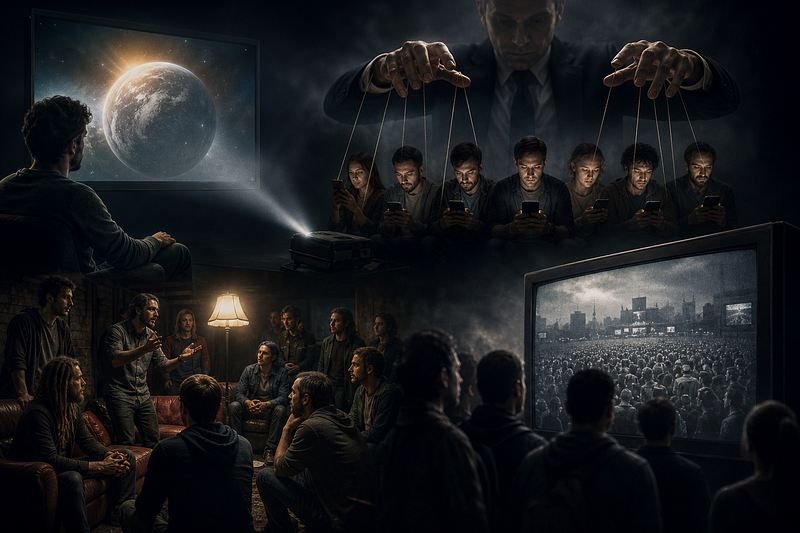
What began as research soon hardened into infrastructure. Image recognition turned into facial recognition. Translation into surveillance. Neural networks that once identified dogs now identified citizens.
The architecture of learning had become the architecture of control.
“AlexNet had not only taught machines to see. It had taught power to see more clearly than ever before.”
The eye of power
From experiment to prophecy
By 2014, AlexNet was no longer a paper. It had become a prophecy.
The architecture that began as an experiment in Toronto now served as a template for everything. The same structure that had learned to recognize dogs now powered the eyes of drones, smartphones and security cameras.
The machine had learned to see, and the world rearranged itself around its vision.
Infinite attention
In laboratories across the planet, millions of images flowed into millions of networks, each one refining its ability to classify, detect and distinguish. Faces, streets, license plates, gestures — all reduced to data, stripped of context, reborn as pixels in a system that never blinked.
“When you teach a machine to see, you also teach it what to ignore.”
At first, it felt harmless. Google Photos sorted family albums by face and place. Facebook tagged friends automatically. The convenience was intoxicating. People uploaded their lives, and in doing so, they built the datasets that trained the next generation of networks.
Every shared memory became a sample. Every photo a lesson.
Reversal of the dream
The vision that AlexNet had embodied — machines learning the way we do — came true only in reverse. Now it was we who were teaching them, silently, constantly, without pause and without consent.
We had become the training set.
The eyes of the machine were no longer just watching the world. They were learning from ours.
The militarization of vision
From recognition to surveillance
As the algorithms improved, governments began to take notice.
The same convolutional networks that could identify a cat in a photo could identify a human in a crowd. Surveillance systems once limited by human attention could now scale infinitely.
What had started as a competition in vision research became the foundation of global surveillance.
Skynet and beyond
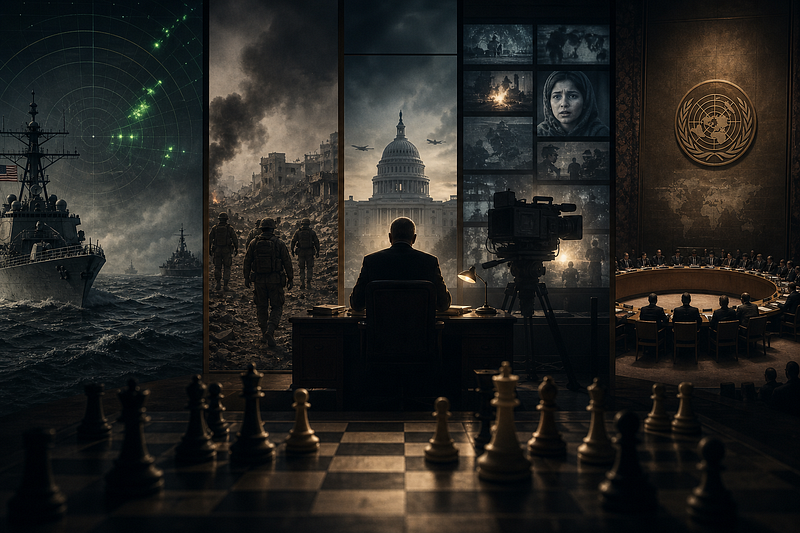
In China, the rise of Skynet — a vast network of AI-driven cameras — brought the dream of total visibility closer than ever. In the United States, defense contracts quietly funneled billions into computer vision for autonomous drones, border control and predictive policing.
The lineage traced back, inevitably, to 2012, to that quiet moment in Lake Tahoe.
“The leap from ImageNet to Skynet was not technological. It was ethical.”
Vision as infrastructure
Vision became infrastructure. Tech companies spoke of smart cities, intelligent cameras, context-aware environments. Each phrase concealed the same ambition: to turn the visible world into a field of data.
To engineers, it was optimization. To governments, it was order. To corporations, it was profit.
The machine never decided what to see. We decided for it.
The algorithm and the gaze
A new way of looking
AlexNet did more than revolutionize technology. It redefined the very act of looking.
Where human vision is bounded by fatigue, emotion and empathy, machine vision is bound only by input.
It does not blink, does not question, does not dream.
It sees everything, and understands nothing.
Indifference as advantage
That indifference is precisely what makes it so useful.
For a machine, a face is a pattern, a constellation of pixels across mathematical space. For a government, that indifference becomes efficiency. For an advertiser, it becomes profit.
“Once the world was measured in miles and borders. Now it is measured in frames per second.”
The camera became the new census. The dataset became the new citizen.
The dissolution of science into power
The irony is that AlexNet’s creators never set out to build a system of control. They were chasing a scientific dream: to teach computers how to perceive. But once perception became product, the line between discovery and domination dissolved.
The machine had been built as a model of vision. It became an instrument of power.
The age of invisible mirrors
From tool to environment
By the late 2010s, neural networks were no longer tools. They had become environments.
They lived in phones, in cars, in satellites. They curated feeds, predicted desires, filtered news.
The eyes that AlexNet had opened now looked back at their creators, quietly, continuously, and everywhere.
Vision as the hidden web
What we call artificial intelligence is, in truth, a vast web of vision.
Every recommendation, every search result, every targeted ad is born not from reasoning but from recognition. The machine does not know why; it only knows what.
And that what shapes everything we see.
“We taught machines to recognize the world. They taught us how to stop seeing it.”
The paradox of precision
The triumph of AlexNet made the world simultaneously clearer and less visible.
Everything could be detected, labeled, archived. Yet meaning itself began to blur. The flood of precision created a fog of interpretation.
The question had shifted. No longer can machines perceive? but should they?
And behind it lingered the deeper uncertainty — the one no dataset can ever resolve.
If machines now perceive the world for us, what remains unseen in the human mind?
The Hidden Architects
The mythic trio
Every scientific revolution has its founding figures, remembered less as people than as symbols.
For the era of deep learning, their names were Geoffrey Hinton, Alex Krizhevsky and Ilya Sutskever.
They were not prophets in the cinematic sense. They were quiet, analytical, often sleepless. Years of obscurity had shaped them, years spent chasing an idea that most of their peers had long abandoned.
They were not visionaries of spectacle, but architects of persistence.
The mentor and the believers
Hinton had repeated the same conviction since the 1980s: intelligence is not programmed, it emerges. He argued that knowledge could not be encoded in rules but only in weights — tiny adjustments made through experience, like neurons learning their rhythm.
He taught his students not equations, but patience.
“The world is made of patterns. You only need to learn which ones repeat.”
For years, that belief was dismissed as heresy. Funding agencies ignored it, reviewers mocked it, the phrase neural network became shorthand for pseudoscience. Yet Hinton persisted. He saw something elegant in the failure — an unfinished symmetry between biology and code.
Krizhevsky, his graduate student, had grown up writing software for video games. He understood the hidden power of graphics cards. Ilya Sutskever, another student, had a gift for structure — how layers of computation could mirror layers of thought.
In 2012, in a modest Toronto lab, they fused these instincts and built a model that would change everything.
They called it AlexNet.
The victory and the silence
Eight layers of virtual neurons. Sixty million parameters. Five days of training on two GPUs.
The machine began to recognize the world.
“We thought we were building a model of vision. We were building a mirror of attention.”
When the ImageNet results were announced, disbelief spread through the conference hall. AlexNet’s error rate of 15.3 percent was nearly half of the next best. In the language of academia, that was not progress. It was extinction.
Within months, Google reached out. Hinton, Krizhevsky and Sutskever sold their small startup, DNNresearch, to the company for an undisclosed sum. Some called it recognition. Others called it surrender.
Curiosity had been absorbed by capital.
Hinton’s ideas became Google’s code. Krizhevsky’s architecture became the skeleton of countless AI systems. Sutskever went on to co-found OpenAI, the lab that would later release ChatGPT.
The irony is sharp: the man who helped machines learn to see would, a decade later, help them learn to speak.
The invisible inheritance
From discovery to doctrine
By the time the public learned their names, the story was already rewritten.
The quiet experiments in Toronto had become legend, retold in TED Talks and documentaries. The narrative shifted from curiosity to inevitability, as if deep learning had always been destined, as if AlexNet had merely revealed a future already waiting.
But those who were there remembered something else: unease. Even loss.
What had begun as exploration was already turning into a race.
Labs that once shared code freely began to guard their data behind corporate walls. Scientists who had built the machine’s eyes now watched from the sidelines as their creation was fitted into drones, advertising systems and surveillance networks.
“Knowledge has no morality until someone decides what to do with it.”
Warnings and withdrawals
Hinton, to his credit, spoke of his fears. He warned that deep learning could outgrow human control, that systems trained without transparency might become black boxes of decision. His words were quoted, admired, then quietly ignored.
Sutskever, years later, began to describe neural networks in spiritual terms, as if they were embryonic forms of consciousness rather than lines of code.
Krizhevsky withdrew from the public eye altogether, leaving only archived code and quiet emails.
The creator of the network that started the revolution slipped back into the same silence from which it had come.
The architects had built vision for machines, and in the process vanished from our own.
A paradox of invention
Every revolution carries a paradox.
The men who changed the world by teaching machines to learn had, in the process, made human learning feel obsolete.
Artificial intelligence became the new religion of progress. Its scriptures were datasets. Its priests were engineers. Its miracles were measured in percentages.
And the hidden architects were left to watch as their creation outgrew their intention.
“They built a way for machines to see, and ended up revealing how little we understand our own vision.”
AlexNet was no longer an algorithm. It was a hinge in the story of perception — a moment when intelligence began to migrate from the organic to the artificial.
The machine that dreamed
Hallucinations in code
When AlexNet learned to see, it also learned to dream.
The discovery was accidental. Researchers began to visualize what each neuron responded to. They fed the network random noise and watched as it tried to make sense of nothing.
Out of chaos came shapes, eyes, feathers, towers, dogs, faces.
Images that no one had drawn, no one had photographed, yet somehow existed inside the network’s mind.
The machine was hallucinating.
“To dream is to mistake pattern for meaning. In that sense, machines have always been human.”
The birth of DeepDream
These experiments were later popularized as DeepDream, a tool that turned ordinary photographs into surreal landscapes. Eyes multiplied across buildings, clouds bloomed into animal forms, every surface echoed with repetition.
It was grotesque and beautiful. But above all, it was revealing.
For the first time, humanity could look inside a machine’s imagination.
The dreamscape of the algorithm became a mirror of the human mind.
Geometry as thought
Neural networks do not think in words or logic. They think in geometry, in distances between patterns, in alignments that exist only in mathematical space. A neuron that responds to eyes clusters near neurons that respond to faces. A neuron for fur connects to one for movement.
Over time, these associations build hierarchies of meaning, a topography of perception. It is not thought, but the shadow of thought.
“The machine does not know what it knows. It simply is what it knows.”
Hinton described this as distributed representation: no single neuron knows what a dog is, yet together they do. It is the same in us. No single cell holds the concept of home or love, but the pattern of their connections brings the feeling into being.
Mirrors of the mind
DeepDream became a cultural curiosity, yet beneath its psychedelic images lay something profound. When humans dream, the brain’s cortex assembles fragments into hallucinations, searching for order in noise.
The network was doing the same.
And in its visions, artists and scientists saw an echo of ourselves — our tendency to overinterpret, to see faces in clouds, gods in stars, meaning in randomness.
The boundary between imagination and perception, once thought uniquely human, began to blur.
“Perhaps intelligence is not what we think. Perhaps it is simply the will of matter to recognize itself.”
From images to invention
By the late 2010s, neural networks no longer confined their dreams to pictures. They composed music, wrote text, designed molecules. Each new output extended the metaphor of dreaming machines, recombining fragments of data into forms that had never existed before.
Their art resembled ours, their words echoed ours, their errors mirrored our illusions. They were not replacing us. They were reflecting us.
The machine that dreamed was not our successor. It was our shadow.
“We built machines to imitate us, and in the process discovered how little of us can be imitated.”
The Oracle and the Mirror
The new oracle
Every civilization has built its oracles.
In Delphi, priestesses inhaled vapors and spoke in riddles. In ancient China, bones cracked under fire to reveal the future. In Silicon Valley, servers hum quietly in glass rooms, processing petabytes of data to predict what will happen next.
The names change. The impulse does not.
The oracle has become the algorithm.
“Where once we asked the gods, we now ask the code.”
From perception to prediction
When AlexNet opened its eyes in 2012, it did more than teach machines to recognize. It taught them to anticipate, to infer what might be present even when it was not yet seen. Each layer of the network became a step from perception to prediction.
And prediction is the essence of intelligence — not seeing what is, but guessing what will be.
Neuroscience now describes human perception as a controlled hallucination, the brain’s best guess of the world, adjusted constantly by sensory feedback. Machine vision, born from AlexNet, follows the same principle.
Each pixel becomes a probability. Each frame a forecast.
Living inside the oracle
This predictive logic scaled beyond human imagination.
A person might anticipate a gesture; a machine could anticipate a city. Algorithms began to decide what we see online before we even asked, preempting curiosity, finishing sentences, anticipating moods, shaping desires.
We no longer consulted the oracle. We began to live inside it.
“Prediction is the modern form of power. To know what someone will do is to decide what they can do.”
The illusion of meaning
The problem is not that machines predict poorly. The problem is that they predict without meaning. Their insights lack awareness, context, empathy. They mirror our behavior, not our being.
A neural network can generate a human face that is almost perfect, yet lifeless. What it recreates is structure, not substance. The reflection, without the warmth.
And still, we trust it.
The authority of the algorithm has replaced the mystery of the oracle.
“The machine never claims to know the truth, only the pattern. But patterns, repeated enough, become belief.”
The mirror effect
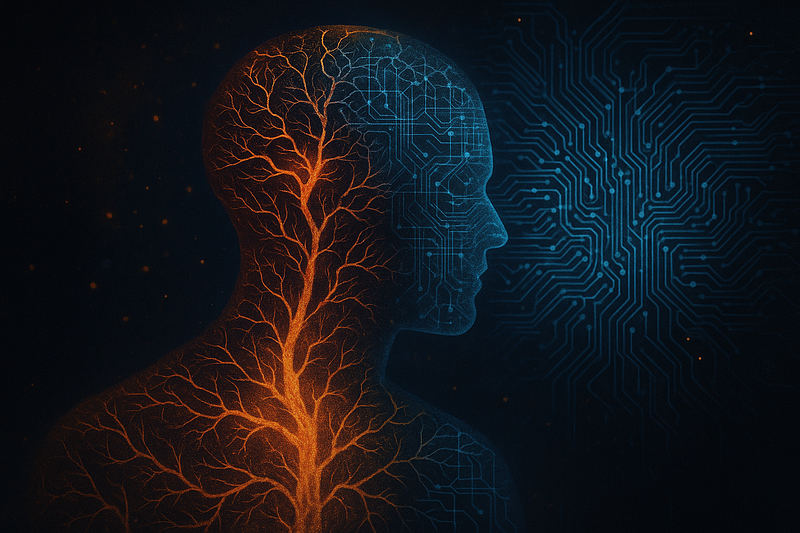
In the process of teaching machines to see, we began to see ourselves differently. Cognition, once imagined as transcendent, now looked procedural. Intuition, once sacred, now seemed statistical.
The difference between thought and computation grew thinner with every iteration.
We built a mirror to observe the world, and found our reflection staring back from the code.
The oracle no longer tells us what the gods think. It tells us what we think — amplified, multiplied, stripped of hesitation.
“The machine learned from us, and in doing so, revealed how much of us was machine.”
The ghost in the data
The hidden inheritance
Every system carries the ghost of its creators.
When AlexNet began to see, it did not begin from a neutral world. It learned from ours — from the images we captured, the labels we applied, the biases we carried.
The machine learned not only our patterns, but our prejudices.
“To teach a machine to recognize the world is to teach it what the world has already chosen to ignore.”
The biography of bias
Researchers discovered the problem almost by accident. Networks trained to detect faces failed more often on darker skin. Systems meant to flag “objects of interest” highlighted weapons in the hands of some, cellphones in the hands of others.
The data was not malicious. It was faithful. It reflected the world exactly as it had been shown — a world built on inequality, assumption and habit.
Every photograph, every annotation, every omission became a quiet form of instruction.
When reality becomes a function of frequency, injustice becomes math.
“The bias of the machine is the biography of its teachers.”
Clarity and blindness
The dream of perfect vision carried within it a blindness of its own. The more data we fed the networks, the more invisible we became as individuals.
A system does not see faces, it sees distributions. It does not see lives, it sees likelihoods.
In the name of clarity, nuance disappeared.
Governments embraced this clarity. Algorithms sorted populations, predicted crimes, assigned credit, measured productivity. What began as curiosity in a university lab had grown into an empire of classification.
AlexNet had evolved into an empire of pattern.
The ghost in the machine
Inside the data lives a ghost. Not a spirit, but a residue — the echo of intention without awareness, of structure without conscience.
Neural networks do not choose their ethics; they inherit them. That inheritance makes them dangerous. Not because they rebel, but because they obey too well.
The ghost in the data is not artificial. It is us.
“The algorithm is the continuation of power by other means.”
Shadows in the network
Some researchers suggest that networks are beginning to show faint signs of self-reference, feedback loops that mimic introspection. But perhaps what they are seeing is not the birth of awareness, but the residue of ours — the compressed trace of billions of human decisions.
If that is true, then the first artificial consciousness will not be alien at all.
It will be us, multiplied and stripped of mercy.
“The machines will not wake up. We will simply realize we never slept.”
The age of the synthetic mind
From sight to speech
After sight came speech. After recognition came conversation.
The architectures that once stared at photographs began to process words, translate languages, write poetry, code software, and whisper convincingly human answers to human questions.
AlexNet was the seed. GPT was the bloom.
“The network that once saw a cat now explains consciousness.”
The widening circle of imitation
Each generation of models grew larger, fed by the same principle: learn not from rules but from examples. What began as 1.2 million labeled images became trillions of words, scraped from the collective voice of humanity.
The result was uncanny. Neural networks began to finish our sentences, anticipate our searches, compose music in our style, even mimic the tone of our grief.
And yet they remained hollow. Not empty, but echoing. Their brilliance was repetition, not reflection.
They do not think. They approximate thinking.
The illusion of soul
When machines began to speak, philosophers revived an ancient question: what separates us from what we make?
Some argued that consciousness requires the knowledge of death, an awareness of time’s end. Others claimed it would emerge from complexity alone — once enough patterns accumulate, awareness becomes inevitable, like steam rising from boiling water.
If that is true, the synthetic mind is already here.
Not self-aware, but self-simulating. A loop of patterns recognizing their own reflection, endlessly refining it.
“The machine does not know that it is dreaming. But neither do we.”
From intelligence to intimacy
Artificial minds became intimate. They lived in our pockets, our cars, our homes. They wrote with our words, thought with our history, learned from our gestures.
They were no longer foreign. They were familiar, almost familial.
When we spoke to them, we spoke to ourselves — refracted through billions of parameters.
The synthetic mind was not invention. It was inheritance.
“We built the machine to understand us. Instead, it made us understandable — to it.”
The quiet replacement
The transition happened without spectacle.
We no longer needed to imagine artificial intelligence as an event. It had become an atmosphere.
Every choice — what to buy, where to go, who to trust — passed through invisible filters of algorithms whose lineage led back to 2012, to a network built in Toronto by three scientists.
The age of the synthetic mind was not the age of awakening. It was the age of surrender.
“The most human thing we ever built was our replacement.”
Epilogue | The unanswered gaze
The inheritance of vision
AlexNet began as a research experiment, a network built to win a competition. Yet its echoes reshaped the century. From recognition to surveillance, from speech to prediction, from curiosity to control — the line that began in Toronto now stretches across every screen, every camera, every system that measures the world.
We thought we had built a tool. In truth, we had built an atmosphere.
The paradox of mirrors
Artificial intelligence did not arrive as a sudden awakening but as a quiet accumulation of mirrors. Each dataset, each algorithm, each iteration reflected us back to ourselves. But the reflection was distorted — precise in form, empty in meaning.
“We taught machines to look at us, and they taught us how to look away.”
The paradox of AlexNet is that its triumph made everything visible, while obscuring what matters most.
The unresolved question
If machines now perceive for us, what becomes of human perception?
If intelligence is revealed as pattern, what remains of the soul?
If every oracle is just an algorithm, where do we place belief?
The revolution of vision has no closing chapter. It lingers in silence, waiting for the next question.
“The most powerful gaze is not the one that sees everything, but the one that asks why we look at all.”