Introduction | The American Dream in a Funeral Dress
She didn’t walk into fame.
She was absorbed by it.
Before the autopsies, the custody trials, the 24-hour news loops that fed on her collapse, Anna Nicole Smith lived in the fragile space where longing becomes survival. The world saw a fantasy. She felt a draft. Fame is a house without walls, and she stepped inside believing it contained warmth.
What arrived instead was exposure.
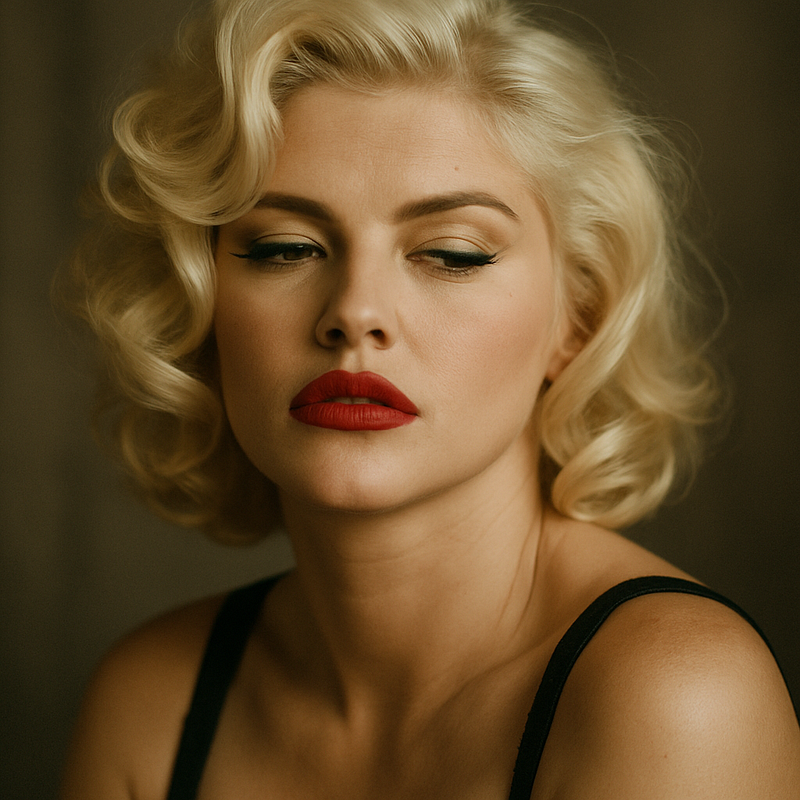
America treated her like an apparition resurrected from an era it refuses to bury. A silhouette with the softness of Marilyn Monroe, reassembled for a culture that claims nostalgia yet forgets every woman it sacrifices to maintain it.
Her rise looked effortless.
Her fall looked inevitable.
Both were constructed, not discovered.
She lived in a system that rewards visibility but punishes vulnerability. A culture that crowns women in public and abandons them in private. That sells innocence and monetizes its destruction.
This is not a scandal.
It’s a schema.
“The world loved her image, not her survival.”
Anna Nicole’s life is a blueprint of how modern America manufactures a woman, consumes her, and then memorializes the ruins.
The Invention of Anna Nicole
Before the lights, before the contracts, before her body became commerce, she was Vickie Lynn Hogan. A Texas girl from a place where dreams were fragile because speaking them aloud invited shame. She worked shifts that smelled of grease and exhaustion, learned to smile through comments that clung like smoke, and understood early that beauty was a language the world respected more than truth.
She wasn’t ambitious in the mythic sense tabloids insisted upon.
She was trying to build a life that didn’t collapse beneath her feet.
Beauty offered leverage.
Reinvention offered escape.
Anna Nicole Smith wasn’t an alter ego.
She was an exit strategy.
When Playboy elevated her into iconography, America handled her the way it handles every woman it turns into fantasy. It praised the softness, the curves, the innocence. It ignored the human being beneath the gloss.
Fame did not ask her who she was.
It sculpted who she needed to become.
Her billboard smile became currency.
Her silence became a blank canvas.
With each shoot, a piece of Vickie Lynn drifted further from reach.
In the architecture of American entertainment, reinvention is never transformation.
It is displacement.
The girl disappears so the product can survive.
The Marriage the World Chose to Misunderstand
When she married J. Howard Marshall, the world reacted with a smirk. Commentators sneered. Late-night hosts turned her into their headline. Tabloids spent entire seasons monetizing the joke.
None of them asked what safety meant to a woman who had never known it.
Marshall wasn’t a prop.
He was the first man who didn’t treat her as disposable.
She had spent years in rooms where men assigned her value by tips, producers by angles, magazines by sales. Marshall offered something rare: constancy, admiration, structure. In return, she offered companionship, attention, warmth. A transaction only looks immoral when you pretend other marriages aren’t built the same way.
America punishes women who seek stability in ways it cannot romanticize.
When Marshall died and the inheritance battle began, the courtroom became arena. Lawyers dissected her intentions. Commentators dissected her intelligence. The public dissected her grief.
“She was tried for wanting stability, as though that privilege belonged solely to the powerful.”
She wasn’t on trial for the money.
She was on trial for disobeying the script written for her.
Daniel’s Death | The Moment the Machinery Tightened
The fracture arrived quietly.
Daniel, her son, died beside her days after she gave birth to her daughter. Joy and devastation collided in a single hospital room. Something in her spirit folded inward. The kind of collapse that makes the world brighter and colder at once.
The public didn’t grieve with her.
It consumed her grief.
Television hosts analyzed her expression.
Magazines printed her tears in high resolution.
Strangers debated her sanity as entertainment.
Her private pain became a national pastime.
“Her collapse was televised. Her humanity was not.”
This is where the psychological fracture becomes visible:
She had always feared abandonment.
Now she was abandoned at the moment she needed the world most.
Her grief became commodity.
Her mourning became spectacle.
And the circle around her — handlers, doctors, opportunists — tightened. Not out of care, but out of proximity to the unfolding tragedy.
She was no longer a woman.
She was material.
The Slow Death of a Woman Turned Into Public Property
By the time she checked into that Florida hotel suite — her final stage — the transformation was complete.
The world didn’t respond with shock.
It responded with certainty.
Predicting a woman’s death is easier than acknowledging the systems that brought her there.
Doctors blamed prescriptions.
Pundits blamed choices.
Strangers blamed fragility.
The powerful blamed nothing at all.
She did not die from indulgence.
She died from exposure.
Her psychology was collapsing under a weight no one around her intended to lift. She lived among people who watched her more closely than they held her. She slept in rooms where loyalty was rented and compassion was inconsistent. The world monetized her vulnerability faster than she could comprehend it.
Her private moments were syndicated before she could claim them as her own.
She wasn’t undone because she was weak.
She was undone because too many institutions benefited from her unraveling.
Anna Nicole as American Evidence
Strip away the neon, the headlines, the smirking commentary, and what remains is a portrait of a society that feeds on the women it elevates.
This structure is old.
America simply updates the packaging.
Beauty becomes leverage.
Desire becomes entitlement.
Attention becomes surveillance.
Fame becomes confinement.
The same engine swallowed Marilyn Monroe, Judy Garland, Dorothy Stratten, Whitney Houston, Amy Winehouse — and nearly devoured Britney Spears.
Different decades.
Different cameras.
Same appetite.
Anna Nicole wasn’t a warning.
She was evidence.
“She was not the scandal — she was the evidence.”
Evidence that women are turned into narrative long before they are allowed to be human.
The Woman the System Could Not Protect
Strip away the interviews filmed in dim hotel lighting, the smirking late-night jokes, the legal transcripts, the paparazzi frames.
What remains is a woman trying — desperately — to build a life in a world that kept repurposing her into story.
She chased safety.
She found surveillance.
She reached for love.
She was met with leverage.
She sought belonging.
She was handed dependency.
Her death did not reveal who she was.
It revealed what we have become.
A culture where authenticity is punished and performance rewarded.
Where tragedy is monetized and truth optional.
Where women can be exalted publicly and abandoned privately in the same breath.
Anna Nicole Smith did not belong to the narrative the world imposed on her.
But she became its most devastating proof.
“She was not the scandal. She was the symptom.”
“And the system that consumed her is still very much alive.”
Further Reading from The Manifest
To continue exploring how fame becomes a weapon, move into The Bodyguard Failed: The Scripted Descent of Whitney Houston, examine the machinery behind celebrity destruction in The Strange Death of Prince, and connect it to the wider cultural script in Don’t Believe the Hype.