People expected a new year.
What arrived instead was continuity.
Not because nothing happened, but because nothing resolved. There was no moment that gathered the year into a single meaning, no event that settled the tension, no conclusion that felt earned. What remained was motion. Familiar, repetitive, strangely predictable. And slowly, almost reluctantly, that predictability began to matter more than any single crisis.
Something shifted.
Not in events, but in attention.
As the year unfolded, systems kept moving at full speed. Language repeated itself. Urgency recycled its tone. Decisions arrived already framed, already explained. And yet, beneath that surface, another rhythm began to appear. Quieter. Slower. Less reactive. People did not stop caring. They stopped moving automatically.
What follows is not evidence gathered at scale, but patterns noticed at human speed.
This is not a summary of a year.
It is a record of what 2025 changed in how people watched, waited, and trusted, and why 2026 begins not with answers, but with space.
A Morning Without Urgency
It is early, but not quiet.
The city is awake without being loud. Trams slide past half-full. Lights burn behind windows without visible activity. On a platform, people stand side by side without looking at one another, phones in hand, no one in a hurry.
Above them, a screen runs headlines. Always headlines. Words move in urgent colors, announcing crisis, escalation, consequence. Language designed to insist that this moment cannot wait.
No one reacts.
A man scrolls without reading, his thumb moving as if the body has taken over once attention has withdrawn. A woman opens a newspaper, reads a paragraph, skips two pages, pauses on a photograph without a caption. Someone laughs softly at a message, pockets the phone, glances around as if to check whether the sound belongs here.
The train arrives. No announcement. No tension. Metal on rails. People step inside, sit down, place bags between their feet. Someone puts in earphones but does not start music. The carriage remains quiet.
Screens above the doors light up again. Different words, same cadence. Crisis. Analysis. Decision. A practiced rhythm, as if a metronome somewhere must not be allowed to stop.
But here, it does.
Not because anyone turns it off. Because no one follows it.
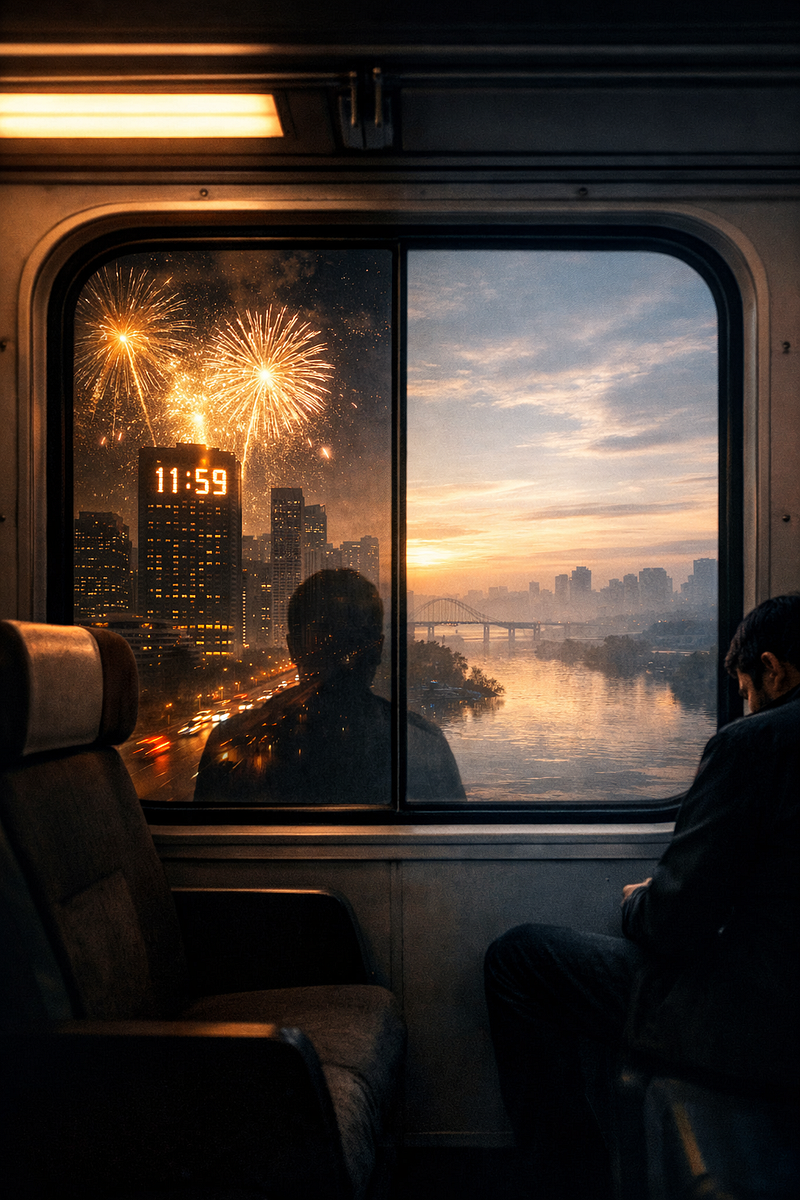
A woman by the window looks outward, not at the passing buildings but at their reflection in the glass. Her gaze lingers somewhere between inside and outside. She does not frown. She does not sigh. She registers.
A few seats away, a man places his phone face-down on his lap. Not defiantly. Simply because, for a moment, he needs nothing from it. His hands rest open, as if waiting for something that will not arrive as a notification.
This is not resistance. There is no agreement, no signal, no shared intent. And yet something is happening.
Urgency is being offered. It finds no recipient.
Not because the world no longer matters, but because constant proximity to everything exacts a cost. There is a limit to what a human nervous system can carry without hardening.
The train moves on. A stop. People leave, others enter. The headlines continue. The tone does not change. The words rotate.
The distance remains.
Not empty.
Not cold.
Functional.
At the next platform, a woman enters with a child. The child asks something quietly. The woman bends down, listens closely, answers just as quietly. The exchange lasts seconds. It concerns nothing of consequence. And precisely for that reason, it is complete.
The train continues.
What happens here will not be measured. It will not appear in charts about trust or engagement. There is no metric for what is taking place.
But this is what a shift looks like when it remains human.
The Year That Began to Repeat Itself
By mid-2025, something had become unmistakable.
Systems no longer bothered to vary their language. Not because nothing was at stake, but because repetition itself had become sufficient. The same phrases circulated. The same procedures unfolded. What once appeared complex revealed itself as routine.
Repetition is rarely intended as revelation. Yet it works that way.
What repeats loses its aura of inevitability. It shifts from event to pattern. And patterns invite placement rather than outrage. They ask for attention rather than reaction.
That was the quiet turn of the year. Not in policy or institutions, but in perception.
The Year People Stopped Moving Automatically
What truly distinguished 2025 was not what happened, but what increasingly did not.
People did not stop watching. They stopped moving on cue.
Not dramatically. Not collectively. It happened in small, almost invisible ways. An article read but not shared. A conversation allowed to end without resolution. A debate that never escalated because no one felt the need to win.
These were not signs of apathy. They pointed to saturation.
Reacting proved easier than caring, but also emptier. Speed revealed itself as neutral, offering no ethical direction. Some processes weakened the more attention they received.
The pattern did not announce itself. It accumulated.
How the Rhythm Was Built
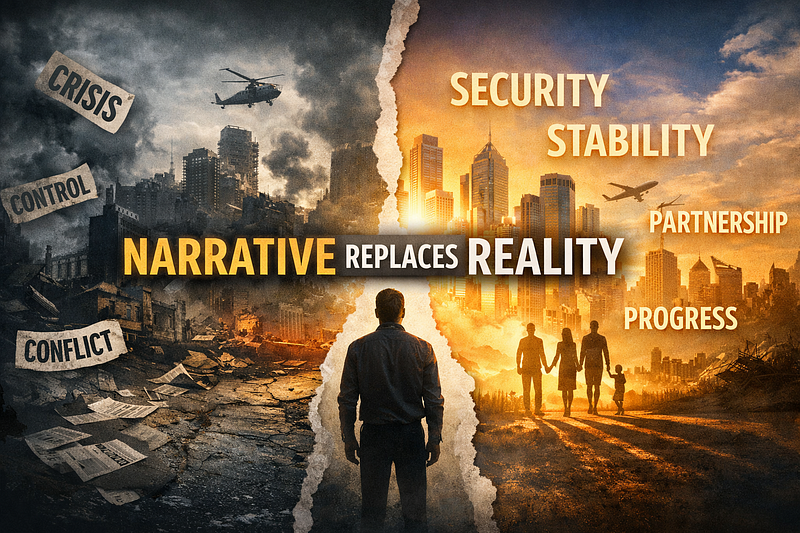
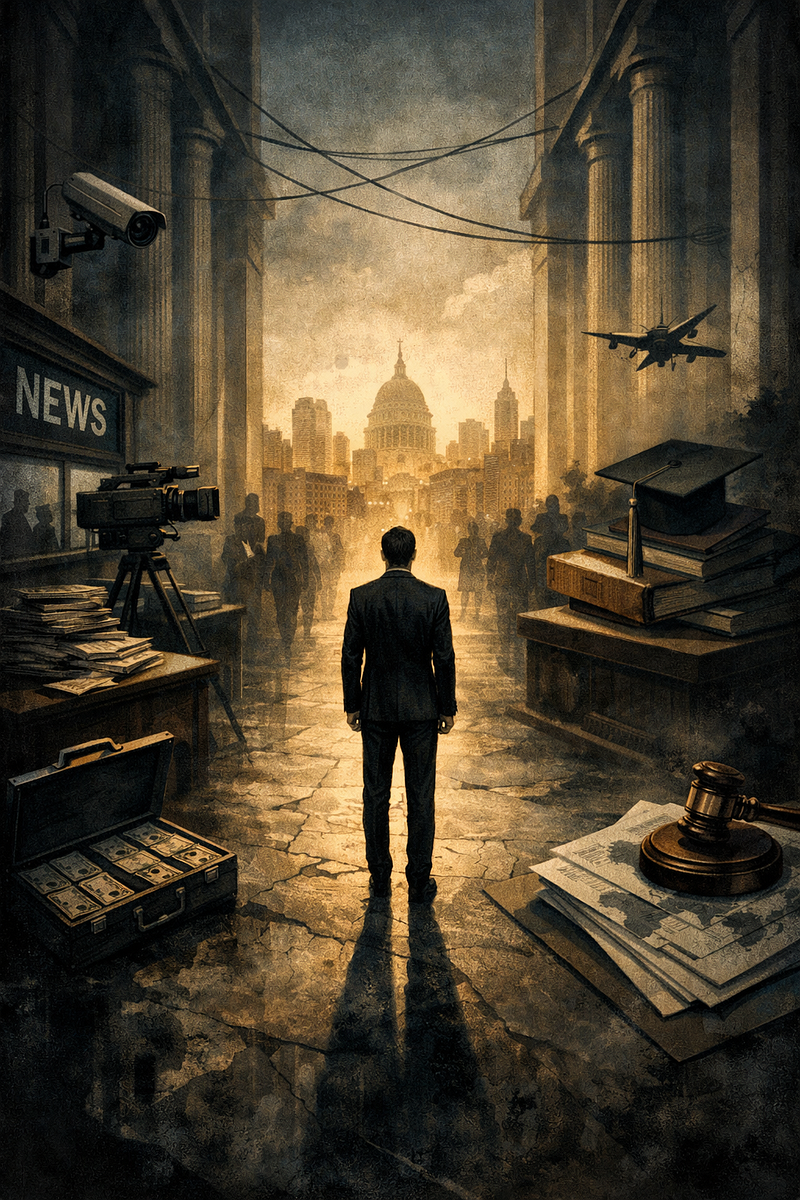
By 2025, the architecture of urgency had become legible.
Headlines rarely exceeded a certain length. Verbs leaned toward motion and threat. Adjectives clustered around inevitability. Notifications arrived in waves, creating accumulation rather than clarity.
A breaking alert was followed by an explainer. Then an analysis. Then a “what this means.” The sequence suggested depth while circling the same limited facts.
The sequence rarely changed, even when the subject did.
On television, graphics performed the same function. Red banners. Countdowns. Split screens. The language of emergency applied regardless of scale.
Everything appeared equally urgent. And therefore indistinguishable.
This machinery trained response rather than understanding. Attention was consumed by volume, not significance.
The exhaustion that followed was not intellectual.
It was physical.
When Attention Failed
Not every moment in 2025 was marked by restraint.
There were days when the machinery worked exactly as intended. A notification arrived late in the evening. A headline sharpened just enough to feel personal. Language calibrated to bypass reflection and land directly in the nervous system.
Within minutes, screens filled with reactions. Anger returned. Certainty followed. Positions hardened with impressive speed.
For a while, it felt as if nothing had changed.
Attention, when stretched too thin, does not sharpen. It collapses.
And collapse, once experienced, is not easily forgotten.
What mattered was not the breakdown, but what followed.
After the surge passed, something lingered. A hesitation. A reluctance to fully re-enter the rhythm. People noticed how quickly they had been pulled back in, how familiar it felt, how little it offered in return.
The discomfort remained. It carried information.
Trust Quietly Changed Its Address
Trust did not disappear. It relocated.
Away from grand explanations and toward consistency. Toward those who did not need to raise their voices. Toward posture held over time.
Trust settled not in certainty, but in care.
Reliability proved quieter than conviction. And more durable.
Systems Move On. People Remain.
Systems are built to continue. They have no pause function. Reflection enters only under pressure. Procedure replaces meaning. Language substitutes for experience.
Opposite this stood something unorganized yet persistent. People who remained present. Not as a mass, but as individuals who refused to give up sensitivity.
This contrast mattered.
It showed that trust in humanity need not rest on ideals, but on observation. Again and again, people demonstrated an ability to sense when something lost its human scale, even without words for it.
Writing as Witness
Within this landscape, writing changed its role.
Less about persuasion. Less about conclusion. More about preservation. Recording how things felt before interpretation overtook them. Not to secure agreement, but to keep memory intact.
Precision became a form of respect.
Hope Without Promise
Hope was often treated with suspicion in 2025, as if it required optimism to be legitimate. The year suggested otherwise.
Hope can exist as posture. As refusal to harden. As clarity without coldness. As patience with uncertainty.
It requires effort.
And it carries a cost.
2026 Begins Here
So 2026 does not begin with a promise.
It begins with room.
Room to observe without haste. To place trust carefully rather than discard it. To anchor attention not in systems that claim certainty, but in people willing to remain attentive.
We do not close 2025.
We carry it.
Not as burden, but as experience.
Not as warning, but as orientation.
And as long as people, somewhere between platforms, screens, and conversations, continue to choose attention over reflex, trust does not need to be restored.
It only needs space.
Author’s Note
This essay is written from observation rather than argument. It does not seek to resolve the year it reflects on, nor to propose conclusions about what comes next. Its aim is simpler: to preserve a way of looking that emerged slowly, across many small moments, before it disappears into interpretation. If it offers anything to the reader, it is not an answer, but a shared attention.