Introduction: Mist over Whitehall
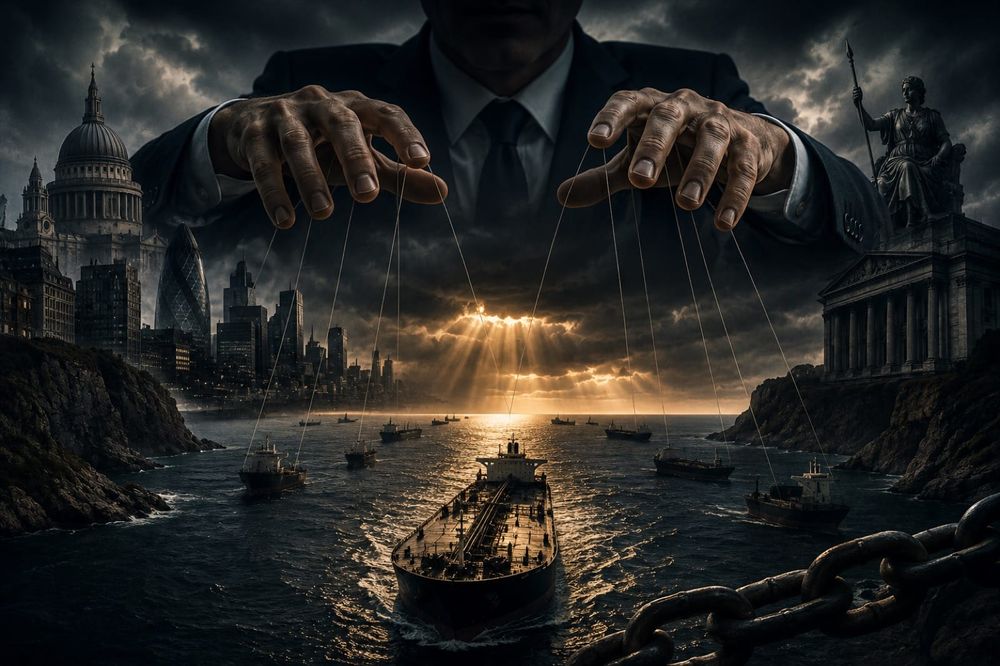
The war in Ukraine is told as America’s story. Washington sends the weapons, Washington commands the headlines, Washington frames the conflict as a struggle between tyranny and freedom. Yet the fingerprints are British.
America shouts. Britain whispers. Which voice truly commands?
In the fog of London, in the marble chambers of Whitehall and the discreet offices of MI6, decisions are made that never reach the evening news. From the crimean war of the nineteenth century to the Nord Stream explosions of our present, the pattern is constant. Britain does not disappear, it mutates. It no longer rules by colonies and flags, but by finance, intelligence and narrative. And in Ukraine, its hidden hand is everywhere.
“Empires do not die. They only learn to disappear behind the curtain.”
The forgotten blueprint: the crimean war
The first media war
The crimean war is a chapter of history the world has chosen to forget. To many, it is a blur of sepia photographs, fading names and battlefields lost in time. Yet when one looks closer, the crimean war was less a relic than a rehearsal, a blueprint for the quiet empire Britain would later perfect.
The year was 1853. The Ottoman Empire was decaying, called the sick man of Europe, gasping for breath along the Bosporus. Russia, under Tsar Nicholas I, sought to extend its influence and secure warm-water access to the Mediterranean. Britain’s concern was ancient and enduring, never let Russia breathe too freely.
When war erupted, Britain and France allied with the Ottomans. The battlefield was not in London or Paris, but on the edge of the Black Sea, on a peninsula jutting into dark waters, Crimea.
What made the conflict extraordinary was not only the fighting but the way it was seen. For the first time, a war was reported daily by correspondents embedded with troops. The Times sent William Howard Russell, who described the mud, the blood and the staggering incompetence of generals in such vivid detail that London gasped as though the war was unfolding in Hyde Park.
It was also the war of images. Roger Fenton, often called the first war photographer, carried his heavy camera to the front, producing images that, though sanitized, gave British citizens their first glimpse of distant battlefields.
“The crimean war was the first modern media war. It taught Britain that battles can be won or lost not only in trenches but in newspapers.”
The combination of text and image forged a new weapon, perception. When the world later saw BBC footage from Kyiv or social media clips from Mariupol, it was only the echo of what began in Crimea. Britain not only fights with soldiers but with stories.
Florence Nightingale and the myth of morality
Every war requires its saint. In Crimea it was Florence Nightingale, the lady with the lamp, who walked through field hospitals tending to the wounded. Her figure became the moral emblem of the war, proof that Britain was not merely killing but also healing.
The Nightingale myth still lingers. It was not only about nursing, it was about the power of humanitarian imagery to sanctify imperial violence. When aid organizations parade white tents and logos in conflict zones today, they are performing a ritual that began with Nightingale’s lamp.
Military blunders, political gains
The war itself was disastrous in military terms. The charge of the light brigade at Balaclava remains a symbol of noble folly, cavalry sent to their deaths by confused orders. Disease killed far more soldiers than Russian bullets. The siege of Sevastopol dragged on for months, a morass of mud and misery.
Yet in politics, Britain gained what it needed. The treaty of Paris in 1856 forced Russia to accept restrictions in the Black Sea. Britain had preserved the balance of power and reminded Europe it remained the indispensable arbiter.
This is the paradox. Britain does not need military triumphs to win wars. It needs only to prevent rivals from winning decisively.
“Sometimes victory is not the conquest of territory, but the denial of victory to others.”
Crimea as Britain’s eternal frontier
Why does this forgotten war matter now? Because it was fought in the same geography that burns today. Sevastopol, the jewel of the Black Sea fleet, remains Russia’s crucial naval base. Control of Crimea still defines access to the Mediterranean and the routes into Europe.
The nineteenth century’s fear of Russian expansion is the twenty-first century’s NATO narrative. Then it was Palmerston, now it is Stoltenberg. Then it was warships in Sevastopol, now it is missiles in Donbas. The stage is the same, only the actors have changed.
Ukraine is once again the frontier where Britain confronts Russia. Not openly with red-coated soldiers, but through intelligence, finance and diplomacy. The blueprint of 1853 has simply been redrawn for 2022.
The Ottoman parallel
Another echo is the Ottoman Empire itself. In 1853, Britain presented itself as the protector of a fragile state under siege. In 2022, Britain cast itself as the protector of Ukraine, another fragile state caught between empires.
The rhetoric is eerily familiar, the noble defense of sovereignty, the wickedness of Russian aggression, the moral duty of Britain to act.
Yet in both cases, the deeper motive was not compassion but control. The Ottomans were propped up not out of love but out of calculation, to keep Russia contained. Ukraine today plays the same role, a buffer, a proxy, a pawn.
The propaganda of maps
Maps from the crimean war reveal another truth. Borders are not only drawn by treaties but by narratives. British newspapers published maps that exaggerated Russian advances, feeding public fear and justifying intervention.
This is the same cartographic propaganda we see now. Color-coded maps on television screens showing arrows, red zones, frontlines. Each map tells a story, but never the whole story.
“Maps do not only describe wars. They prescribe them.”
The forgotten dead
The war killed hundreds of thousands, most from disease. Yet their memory faded quickly. Unlike the world wars of the twentieth century, Crimea left no enduring memorials in Britain. Why? Because the war was never meant to be remembered. It was meant to be rehearsed.
This deliberate amnesia is part of the British pattern. When wars serve as experiments rather than crusades, they are forgotten publicly but remembered institutionally. The archives hold the lessons, the people are left with silence.
Which is why few today realize that Ukraine’s tragedy is only the repetition of an old play.
From Crimea to Kyiv
The crimean war taught Britain enduring lessons. It revealed that wars could always be justified through narratives of morality. It showed that military failure mattered little if the political objective was achieved. And it confirmed that the true key to empire was not conquest but containment.
From Crimea to Kyiv, the script is the same. Britain presents itself as reluctant but righteous, blunders militarily but thrives politically, and ensures Russia remains trapped.
“Every empire has its laboratory. Britain’s was Crimea, and the experiment never ended.”
The city of london: the banker’s battlefield
A city within a city
If Sevastopol was the stage of the nineteenth century, the City of London is the command center of the twenty-first. It is not a city in the ordinary sense. Within London lies another London, a square mile with its own laws, its own police force and a sovereignty that predates parliament itself. The Romans built Londinium, but it was the medieval guilds and merchants who built the City. Today, it is a state within a state, a machine of empire that outlived the empire itself.
“Empires of land collapse. Empires of finance endure.”
Few outside Britain realize that the City is not governed like the rest of the country. Its Lord Mayor travels in gilded coaches, its ancient guilds still decide policy and its representatives sit in parliament as a permanent lobby for finance. Even monarchs have bowed to its peculiar sovereignty. The queen herself once needed permission to enter its gates. When empires fell, when colonies rebelled, when flags were lowered, the City remained untouched.
Oligarchs in Mayfair
By the 1990s, after the collapse of the Soviet Union, Ukrainian and Russian oligarchs flooded London with their fortunes. Chelsea townhouses were bought in cash, football clubs became trophies and law firms specialized in laundering reputations just as banks laundered money. Names whispered in Kyiv corridors, men like Rinat Akhmetov, Ihor Kolomoisky and Dmytro Firtash, became fixtures of Mayfair parties.
Their billions flowed through shell companies in the British Virgin Islands, Jersey and Guernsey, shielded by British law. What the empire once did with spices and slaves, it now did with privatizations and pipelines.
Sanctions, when they came in 2022, did not dismantle this system. They refined it. Frozen assets were not destroyed but absorbed, transferred and reallocated. British courts became battlefields where oligarchs sued each other, while British banks quietly harvested fees.
“War is not only fought in trenches. It is fought in ledgers, in contracts, in the invisible architecture of finance.”
The offshore constellation
The City is not confined to the Thames. Its reach extends across a constellation of islands, the Caymans, Bermuda, the Channel Islands. These are not colonies in name, but in function they remain satellites of British finance.
In Ukraine, these offshore empires became conduits. Reconstruction bonds were issued, hedge funds speculated on Ukrainian debt and insurance syndicates in Lloyd’s priced the risk of war. When buildings in Mariupol crumbled, somewhere in London an actuary adjusted a spreadsheet. The paradox is brutal, destruction on the ground creates profits in the City. Each bomb generates both loss and opportunity.
The paradox of profit
This is not new. In the eighteenth century, the City financed the slave trade, ensuring that even if ships sank or human cargo perished, insurers would pay. In the nineteenth, it financed railways and opium wars. In the twentieth, it financed both sides of conflicts when neutrality brought profit.
Ukraine is simply the latest theatre. The same mechanisms that insured slave ships now insure cargo ships crossing the Black Sea. The same instruments that once underwrote empire now underwrite sanctions.
Officially, Britain presents itself as a democracy guided by parliament. In reality, the City holds a veto over policy. Prime ministers come and go, but the Square Mile endures. In 2008, when the global financial crisis struck, it was the City that dictated bailouts. In 2022, when sanctions were announced, it was the City that decided which oligarchs to sacrifice and which to spare.
Ukraine’s fate, in this sense, was not only decided in Kyiv or Moscow but also in glass towers at Canary Wharf. There, traders speculated on energy futures, turning war into data points on Bloomberg terminals. A building might collapse in Kharkiv while at the same moment a trader in London profited from a rising index.
“In the glass towers of Canary Wharf, the war in Ukraine is not a tragedy but a spreadsheet written in bloodless ink.”
Anchoring Ukraine’s future
Britain learned in Crimea that it did not need to win wars, only to contain rivals. The City applies this lesson financially. By drawing Ukrainian oligarchs into its networks, by controlling reconstruction funding, by managing the pipelines of capital, it ensures that Ukraine remains tethered to the Anglo system.
This is why Britain’s role in Ukraine is larger than weapons or diplomacy. It is about anchoring the country’s future in debt obligations, insurance structures and legal frameworks crafted in London. Unlike Washington, the City does not give speeches. Unlike Moscow, it does not parade soldiers. Its power is quiet, deniable, abstract. Yet it is decisive.
Wars may end, treaties may be signed, but debts remain. A destroyed building can be rebuilt, but a loan must be repaid.
“The empire of soldiers dies with the battle. The empire of bankers survives every treaty.”
Mi6 and the shadow networks
The birth of secrecy
If the City of London is the banker’s battlefield, MI6 is the ghost army. It does not conquer land, it rearranges loyalties, infiltrates institutions and builds invisible networks that last longer than governments. Britain cannot outgun America, but it can outmaneuver through secrecy. And in Ukraine, MI6 has left fingerprints everywhere.
“MI6 does not occupy. It infiltrates.”
The Secret Intelligence Service, better known as MI6, was born in 1909 as Europe stumbled toward war. Its mandate was simple, protect Britain’s empire by watching rivals abroad. But unlike the armies that paraded under flags, MI6 worked in silence. Its files, not its soldiers, were its strength.
The Cold War front
Throughout the twentieth century, MI6 became less an agency than a tradition. Old boys from Oxford and Cambridge filled its ranks, bound by loyalty to empire rather than to governments that came and went. They cultivated a style, discretion, understatement, manipulation by suggestion rather than brute force. Ukraine, though not formally part of the empire, would become a testing ground for these methods.
When the Second World War ended, Britain did not dismantle its shadow structures. It redirected them. Nazi scientists and collaborators were ferried out of Europe along ratlines, often through Eastern Europe. Ukraine was a corridor where fugitives, scientists and agents could be hidden, repurposed or recruited.
“An empire of secrecy does not map land. It maps people.”
During the Cold War, Ukraine was a frontline of intelligence. The CIA often took the headlines, but MI6 moved in parallel, cultivating émigré groups, funding exile newspapers and infiltrating cultural institutions. London was a hub where Ukrainian nationalists met with Western sponsors. British operatives specialized in what they called political warfare, shaping perception, planting stories, building legitimacy for exile leaders who might one day return.
From Maidan to sabotage
When protests erupted in Kyiv in 2013 and 2014, much attention focused on Washington and Brussels. Yet in the shadows, British diplomats and intelligence officers were deeply embedded. Training programs for journalists, scholarships for young leaders and fellowships for judges had already seeded a generation that saw the world through British frameworks.
When the Maidan turned from protest to revolution, those networks paid off. Britain did not need to create the uprising. It needed only to guide its outcome, to ensure that the post-Maidan state looked West rather than East.
The public saw European Union flags waving on Kyiv’s squares. Few noticed the quiet presence of British advisers in ministries, NGOs and media outlets. Perhaps the clearest sign of Britain’s hidden hand came not on Ukrainian soil but under the Baltic Sea. When the Nord Stream pipelines were destroyed in September 2022, speculation ran wild. Moscow denied, Washington denied, Kyiv denied. Yet in intelligence circles, whispers pointed toward Britain.
British naval divers had been training for years in deep-water sabotage. The operation bore the hallmarks of MI6, deniable, surgical, designed to shift the balance without leaving fingerprints.
“MI6 does not announce wars. It rearranges the board so that wars announce themselves.”
The style of infiltration
This was not unprecedented. Britain has a long record of covert manipulation. In 1953, MI6 and the CIA staged a coup in Iran to protect oil interests. In Kenya, operatives managed the Mau Mau uprising not just with force but with networks of informants. In Afghanistan, British intelligence supported mujahideen factions in the 1980s, ensuring Moscow bled while London remained in the shadows. Ukraine is simply the latest page in this catalog.
The pattern is consistent, deny direct involvement but shape the environment so rivals are weakened and Britain emerges as indispensable.
What makes MI6 unique is not just its operations but its style. Unlike the CIA, it does not trumpet its successes in Hollywood films. Unlike the KGB, it does not build statues to its spies. Its power lies in invisibility.
The architecture of secrecy relies on soft recruitment, scholarships, cultural exchanges, fellowships, think tanks. By the time a politician or general reaches power, they have already been shaped by years of subtle influence. This is how Britain turned Ukraine westward without firing a shot.
“The most effective spies are not those who steal secrets, but those who shape the people who write them.”
Networks that endure
Prime ministers resign, cabinets collapse, elections are lost. But MI6 networks endure. The men and women recruited in the 1990s still hold posts in ministries, law firms and media houses in Kyiv today. Their loyalty is not to Downing Street but to the relationships cultivated over decades.
This is why Britain’s role in Ukraine feels spectral yet constant. Governments may change, but the hidden hand remains steady.
Every proxy war has its ghost. In Afghanistan it was the CIA. In Latin America it was the KGB. In Ukraine, it is MI6. The ghost does not appear on television. It does not wave flags. But it whispers in negotiations, guides in training camps, and surfaces in acts of sabotage that appear as accidents of war.
“Britain’s armies may have shrunk, but its networks never did. Where there are shadows, there is MI6.”
What does this mean for the larger picture? That Britain’s real empire is not territorial but relational. It is an empire of networks, loyalties and whispers. Unlike Rome, it does not need legions. Unlike Washington, it does not need bases. Its empire survives in the spaces between states.
Ukraine, in this sense, is not just a battlefield but a laboratory. The war tests how far Britain can shape events without appearing as a combatant. And the lesson so far is clear, very far indeed.
The information arsenal: BBC and Reuters
The empire’s voice
If the City of London is Britain’s financial battlefield and MI6 its ghost army, then the BBC and Reuters are its cannons. They do not fire shells, but words. And words can outlast bombs.
“Control the words, and the world follows.”
The BBC is often imagined as the voice of neutrality, calm, balanced and factual. Yet its origins were anything but neutral. Founded in the 1920s, the British Broadcasting Corporation quickly became more than an entertainment service. It was the empire’s voice.
During the Second World War, millions around the world tuned in to a familiar phrase, this is London. For occupied Europe, those words were hope. For Britain, they were power. Radio waves carried not only news but legitimacy. The BBC’s tone, restrained, authoritative, unemotional, was not accidental. It was cultivated as a weapon.
Reuters as financial weapon
Reuters played the twin role in finance and diplomacy. Founded in the nineteenth century, it provided news to markets and governments, often directly tied to Britain’s foreign policy needs. Its telegrams shaped how wars and treaties were seen, creating a financial narrative that matched Britain’s political aims.
Together, the BBC and Reuters formed a dual arsenal, one aimed at hearts, the other at wallets.
The art of omission
Britain’s use of media as empire-building tool was refined in its colonies. In India, the BBC broadcast programs meant to bind elites to British culture. In Africa, radio was used to promote loyalty to the crown. The technique was always the same, claim impartiality while advancing imperial narratives.
When wars erupted in Kenya or Malaya, the BBC was not merely reporting, it was framing insurgents as terrorists, rebels as criminals and British actions as stabilization. Reuters, meanwhile, reassured markets that Britain remained in control.
“Propaganda thrives not on what is invented, but on what is omitted.”
Ukraine’s headlines
In Ukraine, the pattern resurfaced. From the first days of the 2022 invasion, the BBC set the tone, Russian aggression unprovoked, Ukrainian resistance heroic, Western unity unbreakable. These frames contained truth, but they omitted shadows. Absent were the years of NATO’s eastward push, the failed negotiations, the earlier role of Western powers in shaping Ukraine’s trajectory.
Reuters, feeding global markets, framed Russia as unstable and dangerous, reinforcing the logic of sanctions. Energy prices spiked, futures were traded, and the City profited. The language of finance matched the needs of politics.
While American outlets like CNN and Fox shouted in partisan cadences, the BBC whispered with authority. For global audiences, the BBC’s accent of reason carried more weight than Washington’s noise.
“The war was not only reported, it was remembered in real time.”
The power of neutrality
What makes the BBC unique is its style. Unlike overt propaganda channels, it avoids hysteria. It speaks in understatement, calm narration, measured voices. Yet this very restraint gives it credibility. People distrust shouting but trust composure. The absence of passion becomes persuasive.
In Ukraine, local media often recycled BBC frames. Journalists trained in London returned to Kyiv with the same vocabulary, aggression, sovereignty, resilience. These words, though accurate, formed a discourse that excluded complexity. Western audiences saw the war as morally unambiguous, while Ukrainians themselves internalized the language of Western legitimacy.
Narratives as memory
Reuters’ dispatches shaped investor confidence. When Reuters reported Russian instability, markets responded. When it emphasized Western unity, energy futures shifted. These were not side effects. They were integral to Britain’s strategy, aligning financial flows with political objectives.
Thus the war was fought on three levels simultaneously. It raged in the trenches of Donbas. It spread through the ledgers of the City. And it resounded in the headlines crafted by the BBC and Reuters.
Critics sometimes argue that the BBC is biased. But this misses the deeper point. The BBC does not present itself as partisan, it presents itself as inevitable. Its tone says, this is the way the world is. By claiming impartiality, it colonizes the very idea of truth.
“The greatest power is not to persuade, but to define what needs no persuasion.”
Mercenaries of the crown
Outsourcing empire
Every empire learns to fight with shadows. When soldiers in uniform become too visible, when parliamentary debates turn inconvenient, when treaties limit direct engagement, Britain reaches for its oldest auxiliary force, the mercenaries. They are the deniable extension of empire, men trained in its regiments, paid through its companies, deployed in its interests, but never officially its responsibility.
“When the crown retreats, its mercenaries advance.”
The Special Air Service was forged in the deserts of North Africa during the Second World War. Small teams, deep raids, unconventional warfare, it was empire distilled into stealth. After 1945, the SAS never disappeared. Instead, it became a template exported globally. Veterans retired from service only to reappear in new guises, private contractors, security advisers, corporate soldiers.
From SAS to corporate soldiers
From Malaya to Oman, from Northern Ireland to Afghanistan, the SAS built a reputation for deniability. Officially, they did not exist. Unofficially, they were everywhere. Ukraine became their next stage.
By the 2000s, Britain had perfected the art of outsourcing war. Companies like G4S, Control Risks and Aegis operated in Iraq and Afghanistan, protecting convoys, guarding embassies, training local forces. They blurred the line between military and corporate, between soldier and consultant.
Mercenaries in Ukraine
In Ukraine, these firms resurfaced. Officially, they provided logistical support or protective services. In practice, they facilitated arms transfers, trained paramilitary units and shielded Western officials on the ground. Their presence allowed Britain to act without parliamentary oversight. Casualties among contractors did not appear on official lists.
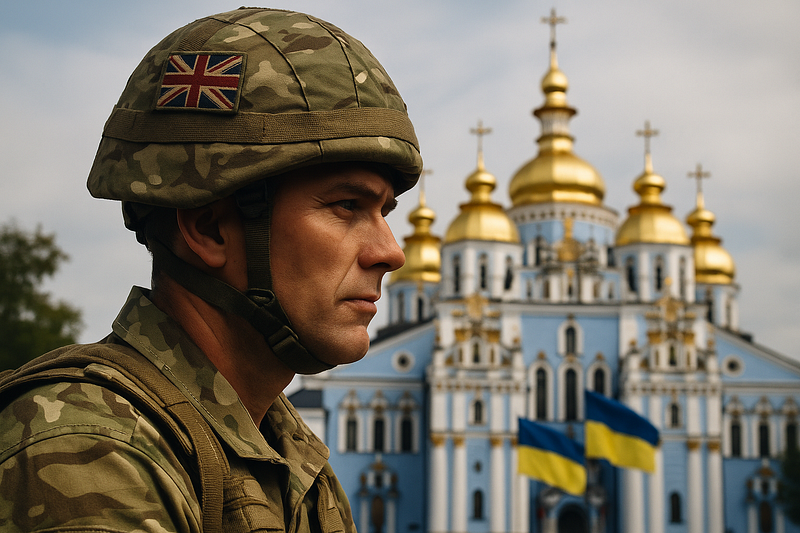
Reports surfaced in the spring of 2022 of SAS veterans in Kyiv. Some were said to be advising Ukrainian special forces in sabotage and reconnaissance. Others were allegedly securing escape routes for Western diplomats. None of it could be proven, all of it could be denied.
“The empire never left the battlefield, it only outsourced its uniform.”
The privatization of violence
Ukraine was not the first time Britain leaned on deniable violence. In the 1960s, mercenaries with British backgrounds fought in Congo, their paychecks signed by mining companies tied to London. In the 1980s, private contractors with SAS pedigrees appeared in Oman and Yemen, protecting regimes that served British interests.
The tradition is not accidental, it is structural. Britain learned that mercenaries provide advantages. They can always be disavowed. They move faster than regular armies. They sustain themselves through contracts rather than budgets.
The privatization of violence has turned war into an industry. In Ukraine, this industry flourished. Contracts for training, security and logistics multiplied. Each contract meant more dependency on Britain’s networks of expertise. The City financed it, MI6 liaised with it, and the SAS alumni executed it.
Soldiers turned contractors
Behind the euphemisms of contractors lie men in their forties and fifties, veterans of Helmand and Basra, now selling their skills in another theatre. Some believe in the cause, others simply chase pay. Their deaths rarely make headlines. Their lives rarely make history. Yet they are the connective tissue of empire, proof that Britain’s reach does not require armies, only networks.
What makes Ukraine unique is not only its battlefield but its market. Every destroyed city requires reconstruction, every insecure convoy requires protection, every foreign visitor requires security. Mercenaries thrive in this vacuum of order. Kyiv became not only a capital under siege but a hub of contracts, where British firms positioned themselves as indispensable.
Empire’s evolution
What does this reveal about Britain’s hidden hand? That its empire has moved from colonies to contracts. Where it once sent governors, it now sends consultants. Where it once deployed legions, it now deploys contractors.
“The soldier dies when the state disowns him. The mercenary survives because the market never does.”
In this sense, mercenaries are not aberrations but the logical outcome of empire’s evolution. Britain has always sought ways to project power without paying the full price. In Ukraine, the mercenary is both weapon and alibi.
The diplomatic façade
Peace delayed
Diplomacy is often described as the art of the possible. For Britain, it has long been the art of the impossible, the craft of appearing as mediator while ensuring peace never arrives too soon. In Ukraine, this façade became visible in 2022, when Britain’s leaders stood as cheerleaders for Kyiv while working quietly to block negotiations.
“Sometimes the most decisive act in war is not a battle won, but a peace delayed.”
In March and April 2022, as the first shock of invasion settled, delegations from Russia and Ukraine met in Istanbul. The outlines of a potential settlement emerged, neutrality for Ukraine, security guarantees, partial concessions on territory. Fragile, tentative, but real. Then came Boris Johnson.
In early April, he arrived in Kyiv unannounced, greeted with cameras, walking the streets with Zelensky as though to embody solidarity. What the public saw was theatre. What was said behind closed doors was different. Johnson urged Zelensky to hold firm, to reject settlement, to fight on. Britain, he promised, would deliver weapons, training and support.
The talks withered. The war continued.
Diplomacy as dependency
Successive British leaders repeated the ritual. Liz Truss in her brief premiership declared Ukraine’s cause our cause. Rishi Sunak pledged billions in aid. Each visit to Kyiv was framed as solidarity, each handshake as defiance. Yet beneath the slogans lay a harder calculus. A short war would diminish Britain’s influence. A prolonged conflict ensured dependence. Kyiv on Western arms, Europe on Western energy, Washington on Britain’s networks.
“Diplomacy, when stripped of ceremony, is often the management of dependency.”
This was not new. At the congress of Vienna in 1815, Britain pushed for arrangements that prevented any continental power from dominating. In the twentieth century, it resisted European integration unless financial exceptions were carved out. The method is consistent, champion peace publicly, sabotage it privately.
The image of Johnson walking with Zelensky through Kyiv’s streets was more than solidarity, it was performance. Diplomacy is theatre, and Britain understands stagecraft.
“For empires, peace is not an end. It is an interruption.”
Rome’s silence and Britain’s whisper
Silence as strategy
Throughout the war in Ukraine, the Vatican has spoken softly, if at all. While presidents thundered about democracy and sovereignty, while prime ministers raised their voices in parliaments, Rome’s words came draped in ambiguity. Appeals for peace, humanitarian corridors, prayers for the displaced. Nothing more. Nothing less.
“In war, even silence has a patron.”
To the outside world, the Vatican appeared neutral. Pope Francis called for dialogue, urged compassion, condemned suffering. He avoided naming Russia as the aggressor, avoided endorsing Ukraine as the victim. For some, this seemed cowardice. For others, prudence. But history shows that the Vatican’s neutrality is never absence. It is presence disguised.
The hidden alliance
What made the Vatican’s neutrality valuable was not its morality but its networks. Britain has long understood this. Since the Reformation, London and Rome have been adversaries in faith but partners in politics. During the nineteenth century, British diplomats used Catholic missions as listening posts in Asia and Africa. During the Cold War, MI6 cultivated links with Vatican officials to track communist movements.
In 2022, those channels stirred again. While Johnson and Sunak spoke loudly in Kyiv, British envoys in Rome spoke quietly with cardinals. Britain needed the Vatican’s silence, a silence that allowed the war to be cast as secular geopolitics rather than religious struggle.
“A whisper in Rome can legitimize a shout in London.”
Neutrality as leverage
Pope Francis frequently criticized NATO expansion, suggested the West bore partial responsibility and refused to frame the war as a simple tale of good and evil. His tone angered Kyiv, puzzled Washington, but benefited London. By refusing to bless one side, he prevented the conflict from becoming a crusade.
This alignment is not new. In the 1980s, the Vatican supported Poland’s Solidarity movement, while Britain and the CIA provided parallel backing. In the 1940s, Pius XII maintained silence on Nazi atrocities, giving cover for diplomatic maneuvering while intelligence was passed through church channels.
What makes Rome’s silence powerful is its architecture. Silence is not emptiness but framing. Each omission shapes perception. By not naming Russia, the Vatican gave Russia space to negotiate. By not canonizing Ukraine as martyr, it left room for future settlements.
“Sometimes neutrality is not balance but leverage.”
For Britain, which thrives on protracted conflicts, this silence was useful. The Vatican’s refusal to speak loudly was not abdication but influence. Together, Rome and London reminded the world that war is not only fought with weapons and words, but with silence.
The energy war
Pipelines as empire
Every war is about territory, and every territory is about resources. In Ukraine, the battlefield is not only the trenches of Donbas but the pipelines beneath the Baltic, the contracts signed in glass towers and the winters of Europe waiting to be heated. When Nord Stream exploded in September 2022, the blast did not just rupture steel. It rewired the arteries of empire.
“Pipelines are not just steel under the sea. They are arteries of empire.”
The images were surreal. Geysers of gas foamed through the Baltic Sea, bubbles as large as cities rising to the surface. Nord Stream 1 and 2, multi-billion dollar pipelines linking Russia directly to Germany, were disabled in an instant. Questions spiraled. Who did it? Why? How? Washington accused Moscow, Moscow accused Washington, Kyiv accused shadow forces. Yet in intelligence corridors, Britain’s name circulated.
British naval divers had trained for years in deep sabotage. The operation bore the hallmarks of MI6, deniable, surgical, designed to shift the balance without leaving fingerprints.
Energy leverage
The effect was immediate. Germany lost its direct line to Russian gas. Europe was forced back into the arms of the Anglo-American energy system.
Unlike Germany, Britain was never fully dependent on Russian gas. Its strategy had always been diversification. LNG terminals dotted its coasts, from the Isle of Grain to Milford Haven. When Nord Stream fell silent, Britain’s terminals became Europe’s lungs. LNG arrived in Britain, was regasified and piped across interconnectors into continental grids.
“Control the gas, and you control the winter. Control the winter, and you control the war.”
Behind these flows stand Britain’s energy giants, BP and Shell. Born in the age of empire, they never shed their colonial DNA. BP began as the Anglo-Persian Oil Company, its fortunes tied to Iranian fields and coups. Shell’s empire stretched from Indonesia to Africa. In Ukraine, their role was quieter but real. War disrupted contracts, but it also opened markets.
Energy is not just about drilling and shipping. It is about insuring. Without insurance, no tanker sails, no pipeline operates. Lloyd’s of London, centuries old, became central once again. The syndicates calculated risks, priced war into policies and ensured that even in chaos, commerce continued.
Energy as quiet weapon
For Europe, the destruction of Nord Stream was not just an economic shift, it was a political one. Germany, once the industrial heart of Europe powered by cheap Russian gas, found itself weakened. France faced shortages. The continent turned westward, to Britain and the US.
Ukraine itself is not only a battlefield but a pipeline corridor. Soviet-era lines still run through its soil, carrying gas from east to west. For decades, disputes over tariffs, transit fees and diversions were weapons in the Russian-Ukrainian standoff. For Britain, securing this corridor meant ensuring Europe’s dependence flowed not eastward but westward.
Beyond steel and contracts, energy carries psychological weight. The fear of a cold winter destabilizes governments. Protests erupt when bills rise. Elections swing on the price of heating. Britain understands this. By positioning itself as Europe’s energy broker, it holds not only pipelines but politics.
“Energy is empire’s quietest weapon, because it can starve without striking.”
Psychological warfare
The second battlefield
Every war is fought twice. Once on the battlefield, once in the mind. Britain has always excelled at the second. From the shadows of Bletchley Park to the algorithms of social media, it has mastered the art of shaping perception until perception becomes reality.
“Every war is fought twice, on the battlefield, and in the mind.”
During the Second World War, Britain turned secrecy into science. At Bletchley Park, mathematicians and linguists cracked the Enigma codes, feeding Allied generals with intelligence that reshaped campaigns. But the real legacy was not codebreaking. It was the realization that information itself could be a weapon. That lesson never died.
Deception as tradition
One story illustrates the British genius for deception. In 1943, Operation Mincemeat planted fake invasion plans on a corpse dressed as a Royal Marine, allowing it to wash ashore in Spain. The Germans believed the ruse and diverted troops, saving thousands of Allied lives. The principle endures, if you control what the enemy believes, you control his actions.
In Ukraine, the same principle was visible. Stories of Russian collapse, of imminent Ukrainian counteroffensives, of Western unity for as long as it takes, carried the same DNA. Even when the battlefield was stalemated, the narrative declared victory.
Narratives of inevitability
From the first weeks of the invasion, British media emphasized Russia’s failures. Convoys stalled, generals killed, morale shattered. Some of this was true, some exaggerated, some unverified. But truth mattered less than rhythm. By repeating the language of collapse, Britain sustained morale in Ukraine and unity in Europe.
Narratives of inevitability are powerful. If a public believes victory is assured, it tolerates sacrifice. If soldiers believe the enemy is weak, they fight harder. The narrative becomes self-fulfilling.
Screens as trenches
Unlike the trenches of Crimea or Normandy, Ukraine’s war unfolded on screens. Videos of drone strikes, clips of defiant soldiers, memes mocking Russian blunders, all circulated at speed. Britain’s information units, trained in cyber warfare and psychological operations, thrived in this environment. From Cheltenham’s GCHQ to London’s information brigades, content was monitored, seeded, amplified.
Tweets became the leaflets of a digital battlefield. Memes became the new propaganda posters pinned to virtual walls.
Containing Europe
The goal was not merely to deceive Russia but to contain Europe. By framing the war as a moral crusade, Britain kept hesitant allies aligned. By emphasizing Russian atrocities, it silenced questions about NATO expansion. By amplifying Ukrainian heroism, it prevented fatigue from setting in too early.
This was psychological containment, ensuring that the political space for negotiation shrank until only escalation remained.
Morale as empire’s weapon
What Britain understands is that morale is more decisive than ammunition. A nation convinced of its righteousness will endure privation. An army convinced of its inevitability will fight in mud and snow. Britain has always specialized in sustaining morale, not only of its allies but of its own declining empire.
“The greatest power is not to win the battle, but to decide what the battle meant.”
Closing reflection, the invisible empire
Continuity disguised as decline
Wars are often measured in numbers. Casualties counted, shells fired, dollars spent. These are the statistics that fill reports and headlines, the visible markers of conflict. But beneath those numbers lies another calculus, the quiet architecture of an empire that has never died.
“Empires rarely fall. They only learn to hide their hand.”
From the trenches of Crimea in 1854 to the shattered streets of Kyiv in 2022, the pattern is consistent. Britain steps into the margins, shaping outcomes without appearing to lead. It does not need to conquer, it only needs to contain. It does not need to proclaim victory, it only needs to prevent rivals from claiming it.
Empire without empire
The Crimean War taught Britain that military defeats can still be political victories. The City of London proved that financial networks can outlast empires of land. MI6 perfected the art of infiltration over occupation. The BBC and Reuters turned words into weapons, narratives into memory. Mercenaries carried empire’s violence beyond the reach of parliaments. Diplomats smiled as they closed the door on peace. Rome’s silence offered cover. Pipelines rewired dependency. Psychological operations framed perception until perception itself became truth.
America dominates the stage, but Britain stands in the wings. Washington roars with tanks and sanctions. London whispers with contracts and narratives. The audience sees the actor, it does not see the director.
This is Britain’s genius, to transform imperial decline into imperial invisibility. What appears as absence is in fact adaptation. The empire no longer wears uniforms, it wears neutrality, legality, objectivity. It survives not by being seen, but by becoming the framework through which others see.
“The greatest camouflage of empire is not in forests or deserts, but in plain sight.”
The illusion of disappearance
Wars are measured in what is seen, convoys stalled, cities shelled, speeches thundered. But wars are also measured in what is unseen, the loans signed in Canary Wharf, the whispers in Vatican corridors, the unseen divers in the Baltic, the unseen editors choosing which words to print.
In Kyiv, artillery shook the earth. In London, spreadsheets flickered across screens. Both were war. One killed instantly, the other bound futures for decades.
The tragedy is not only Ukraine’s suffering but the blindness of a world that sees only Washington’s face. Commentators speak of American power, American decline, American mistakes. Yet behind the American roar is Britain’s whisper.
“History’s loudest actors are not always its truest authors.”
The haunting empire
This is not a new story. In the seventeenth century, Britain controlled seas through the Royal Navy while appearing a small island on the edge of Europe. In the nineteenth, it manipulated the balance of power on the continent without conquering it. In the twentieth, it survived imperial collapse by reinventing itself as America’s indispensable ally.
The twenty-first is no different. Britain appears diminished, a nation of Brexit turmoil, economic decline and cultural nostalgia. Yet in Ukraine, it revealed the same resilience, power redefined as invisibility.
Perhaps the greatest illusion of empire is not that it rules, but that it has ceased to exist. Britain did not vanish. It learned to haunt.
“Empires never die. They only change their costume.”
Further chapters of the Manifest
If this chapter intrigued you, continue your journey through the Manifest: