Europe presents itself as a continent of responsibility. A continent of values, alliances, and historical memory. Its leaders speak the language of unity, sacrifice, duty, and order. The tone is serious, almost solemn. It suggests maturity. It suggests discipline. It suggests that Europe is carrying a burden history has placed upon it.
But beneath that language, a harder reality is taking shape.
Europe is damaging itself economically, narrowing its diplomatic room for maneuver, deepening its military dependence, and presenting all of this as moral seriousness or historical responsibility.
What is described as loyalty increasingly functions as something else.
A form of strategic self-weakening.
That is the real subject of this article. Not whether alliances matter. They do. Not whether Russia can be trusted. That is not the point. Not whether Europe faces real dangers. It does. The deeper question is whether Europe has begun to confuse loyalty with strategy, obedience with maturity, and alignment with sovereignty.
Because that confusion changes everything.
A continent can survive bad decisions for a long time. It can keep its institutions, its elections, its treaties, its summits, and its speeches. It can preserve all the external forms of agency while slowly surrendering the substance of it. That is what makes the present moment so important. The danger is not only military. It is civilizational. Europe may be reaching the point where it can still speak as though it is free, while acting more and more like a power whose real range of choice has narrowed.
That is not a rhetorical problem.
It is a strategic one.
The arithmetic beneath the slogans
Every political order develops a preferred vocabulary for difficult times. Europe’s vocabulary is polished. It speaks of burden sharing, democratic values, long-term readiness, deterrence, solidarity, and responsibility. This language sounds stable. It gives the impression that the continent is acting with composure under pressure.
But polished language can conceal crude arithmetic.
The arithmetic is this: higher energy costs, weaker industrial competitiveness, greater exposure to external strategic decisions, expanded military commitments, shrinking diplomatic range, and a political culture increasingly unable to distinguish alliance loyalty from Europe’s own long-term interests.
That is not strength.
That is an expensive way of losing freedom while continuing to speak as though freedom remains intact.
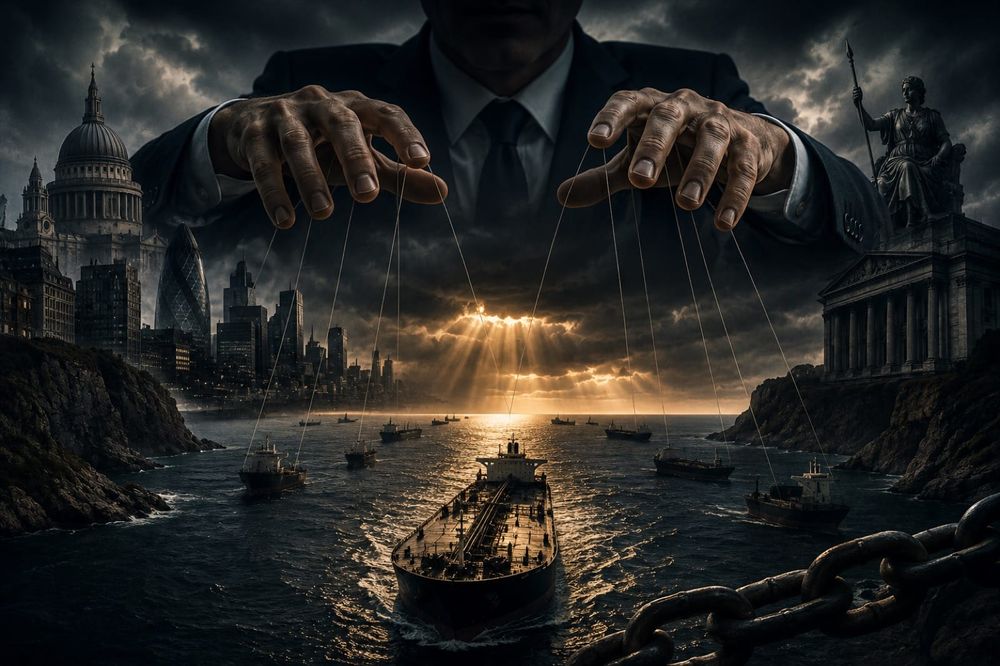
Europe’s central mistake is not that it has allies. Alliances are normal. The mistake is that Europe increasingly behaves as if loyalty to Washington and loyalty to Europe are naturally the same thing. That assumption no longer deserves to go unchallenged.
Because the United States is supposed to pursue American interests. That is what states do. There is nothing scandalous about Washington protecting its own power, influence, markets, and strategic primacy. The scandal is that Europe increasingly acts as though questioning American strategy is somehow incompatible with European responsibility.
This is how dependency matures.
Not through conquest.
Through reflex.
The shrinking of Europe’s diplomatic imagination
A sovereign continent must be able to imagine more than one path.
That is where Europe now looks weak.
The narrowing is not always visible in law. It does not always appear in formal declarations. Often it appears in tone, in what can still be proposed without immediate suspicion, in which ideas remain respectable before they are even debated and which ideas are dismissed before they are even heard.
That is how a diplomatic horizon contracts.
Peace is still praised in the abstract. Every government says it wants peace. Every official order commemorates peace, invokes peace, and surrounds itself with the language of peace. But peace only becomes politically meaningful when it remains available as a real option under pressure.
And this is where Europe’s condition becomes revealing.
Negotiation is no longer judged only by whether it can reduce destruction, restore stability, or prevent broader deterioration. It is judged by whether it fits within the approved architecture of pressure. Diplomacy is tolerated as language, but not always as direction. De-escalation is welcomed as a phrase, but distrusted as a policy. Any genuinely independent European path risks being treated not as strategy, but as weakness.
That is not how a confident civilization behaves.
That is how a disciplined one behaves.
Over time, this becomes more than a policy problem. It becomes a mental one. The continent internalizes the limits placed upon it. What begins as temporary coordination hardens into permanent instinct. Leaders stop asking what best serves Europe and begin asking what Europe is still allowed to consider.
That is a deeper loss than many are willing to admit.
A civilization begins to weaken when it cannot think freely about peace.
Energy and the price of obedience
There is a reason Europe’s political language has become so ceremonious. Ceremonial language helps conceal material pain.
Energy is never just fuel. It is industrial time, social stability, competitiveness, leverage, and political pressure compressed into one domain. For decades, much of Europe’s industrial seriousness rested on a simple reality: the continent could still produce under conditions that made production worth keeping. That material base gave weight to Europe’s political claims. It gave substance to its self-image.
That basis has been damaged.
The rupture with Russian energy did not merely alter suppliers. It altered the cost structure of European industry. It changed the arithmetic beneath steel, chemicals, fertilizer, transport, heating, and manufacturing. It forced governments to manage a new era in which the system could continue, but often at a higher price, under greater strain, with reduced competitiveness.
This is where the official story becomes too flattering.
Europe did not simply choose principle over comfort. It accepted a path that is materially harder, strategically narrower, and economically more corrosive, then wrapped that path in the language of virtue. It told itself that adaptation was the same as strength. It told itself that endurance was the same as sovereignty. It told itself that surviving a costly arrangement proved the arrangement was wise.
But survival is not sovereignty.
A continent can keep the lights on and still become weaker. It can avoid collapse while normalizing long-term erosion. It can absorb losses for years and still fail the deeper test, which is whether it remains free to shape its own future rather than merely pay the price of choices already locked in.
That is Europe’s energy story now.
Not collapse.
Not stability.
Managed self-diminishment.
Rearmament and the new permanent condition
The same pattern appears in defense.
Rearmament is no longer being framed as a temporary emergency reflex. It is becoming part of the structure through which Europe now understands itself. Budgets shift. Industrial priorities shift. Infrastructure planning shifts. Mobility, procurement, strategic doctrine, and political language all move in the same direction.
This can be explained. That is not the issue.
The world is harsher than it was a decade ago. Eastern European states perceive real danger. Security classes speak in the language of deterrence because deterrence feels safer than uncertainty. None of this should be caricatured.
But what can be explained is not automatically what should be accepted without deeper scrutiny.
Because once a political order reorganizes itself around permanent readiness, peace becomes institutionally inconvenient. Not morally impossible. Institutionally inconvenient. Careers begin to depend on it. Budgets begin to depend on it. Prestige begins to depend on it. Entire bureaucratic structures begin to depend on the continuation of the condition that justified their expansion.
That is how a response becomes a system.
What begins as emergency becomes policy. Then identity. Then taboo.
At that stage Europe is no longer simply preparing for danger. It is reorganizing itself around danger as a durable condition. And when that happens, diplomacy no longer enters as an equal path. It enters as a disturbance to the order that has been built in the name of security.
So the question is no longer whether Europe takes defense seriously.
The question is whether Europe is becoming unable to imagine security outside the Atlantic military frame through which it has learned to understand itself.
That is a much more serious problem.
Misplaced loyalty
This is the part polite political language tries hardest to avoid.
Europe’s current course is not only the product of external pressure. It is also the result of internal willingness. European elites, especially those formed inside transatlantic structures, increasingly confuse discipline with seriousness, alignment with maturity, and loyalty with wisdom.
That is why the present condition is more than dependency imposed from outside. It is dependency reproduced from within.
And that is more dangerous.
Because a continent can resist pressure from outside more easily than it can resist habits that now feel like its own moral instinct. When subordination begins to sound like virtue, criticism becomes harder. When self-harm is rebranded as historical duty, refusal begins to look selfish. When economic damage is reframed as ethical adulthood, public debate itself becomes distorted.
That is where Europe now stands.
It is weakening itself economically, narrowing its diplomatic options, and deepening its military dependence, only to present this process as moral seriousness and historical responsibility. At that point, loyalty is no longer merely an alliance reflex.
It becomes a mechanism of strategic self-weakening.
The deeper scandal is not that Washington pursues American interests. That is expected. The deeper scandal is that Europe keeps sacrificing parts of its own and calling that sacrifice principle.
Peace as the real test of sovereignty
Every order claims to support peace in theory. Peace is easy to admire when it remains ceremonial, retrospective, or abstract. But peace only becomes politically meaningful when it remains available as a real choice under pressure.
That is the true test of sovereignty.
A continent is sovereign not when it can praise peace after others have already arranged it, but when it can still choose de-escalation while costs, narratives, alliances, institutional reflexes, and strategic habits all push in the opposite direction.
That is why the European question has become so grave.
The issue is not simply whether Europe has suffered. It has. The issue is not whether Europe has adapted. It has. The issue is whether adaptation has become a substitute for autonomy.
Europe still has parliaments, elections, treaties, central banks, flags, and leaders. But the harder question is whether it still possesses strategic freedom in matters of war, energy, diplomacy, and long-term survival. Because a political order can preserve all the forms of agency while slowly surrendering the substance of it.
This is not a sentimental argument for Russia. Nor is it an argument for naivety. It is an argument about Europe itself. About whether a civilization can endure indefinitely while outsourcing its deepest strategic decisions to a framework whose priorities are not always identical to its own.
A continent does not lose itself all at once.
It loses itself when obedience begins to sound like maturity. When sacrifice is always described as temporary, yet never ends. When every alternative is dismissed before it can be tested. When diplomacy survives only as ornament. When peace remains admirable in language, but inaccessible in practice.
That is how dependency ripens.
Quietly.
Respectably.
Under the banner of responsibility.
The choice Europe kept avoiding
At some point the distinction between temporary pressure and permanent orientation disappears.
That is where Europe now stands.
Its factories still run. Its treaties still function. Its leaders still gather beneath flags and speak in measured language. But beneath the continuity lies a harder truth. A continent can keep all the outward forms of agency while slowly surrendering the reality of strategic choice.
This is why the real question is not whether Europe supports peace in theory. Every official order says it does.
The real question is whether Europe is still free to choose peace when peace no longer flatters the architecture that has grown around confrontation.
That is the question European leaders have postponed for years.
Not because the costs were invisible. They were visible in energy bills, industrial strain, diplomatic narrowing, and the steady expansion of military logic into the center of policy. Not because alternatives were unthinkable. Negotiation, de-escalation, and a more independent European security doctrine were never impossible to imagine. They were simply pushed aside, again and again, in favor of alignment, endurance, and managed sacrifice.
This is why the choice now facing Europe is larger than one war.
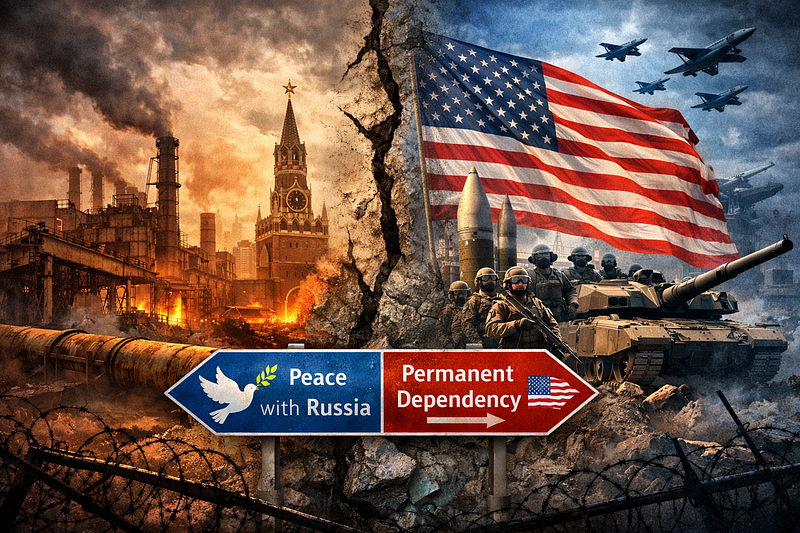
It is a choice between rebuilding a continental logic of peace, difficult compromise, hard diplomacy, and strategic independence, or accepting a future of permanent dependency in which Europe remains economically strained, militarily embedded, diplomatically narrowed, and psychologically conditioned to confuse subordination with virtue.
The choice Europe kept avoiding was never only about Russia.
It was about whether this continent still wanted to act as a strategic power in its own right.
Now that question has returned in its hardest form.
Not as theory.
Not as rhetoric.
Not as a phrase in a communiqué.
As consequence.
Related reading within The Manifest
NATO: The Façade of Peace and the Architecture of Power